
Fields in Woodford County Property Tax Records
Check the assessment year and tax year printed beside every figure before comparing anything. The Woodford County PVA is the source for valuation and classification data, while the Sheriff publishes bill and payment information for Woodford County.
| Field | What It Shows | Where |
|---|---|---|
| Market or fair-cash value | PVA appraisal estimate for the assessment year | PVA/qPublic |
| Taxable assessment | Value after applicable exemption or special treatment | PVA record |
| Exemptions | Approved homestead/disability deduction where applicable | PVA record |
| Tax districts | Jurisdictions and rates that contribute to the calculation | PVA and bill |
| Bill and payment status | Amount billed, paid, or still due for a tax year | Sheriff tax portal |
| Delinquent certificate | Turnover, sale, assignment, or release status | County Clerk |
Kentucky law requires real property to sit on the tax roll at 100% of fair cash value. Market value and fair cash value are treated as the same thing for administration. Exemptions and agricultural classification can push the taxable assessment below gross market value. The two figures often diverge, though. Deed consideration is something else entirely. It records what a buyer paid, and it never automatically becomes the PVA's market value for Woodford County property records.
Who Assesses, Rates, and Collects
The PVA is an elected state official working locally, assessing both real and personal property across Woodford County. That office neither sets tax rates nor collects payments. Cities and other taxing jurisdictions adopt their own rates each year. The Sheriff then collects the current tax bill, and unpaid accounts eventually move to the County Clerk, who runs the delinquent-tax sale.
That split trips up many a property search. Challenge a valuation with the PVA. Ask about a current payment at the Sheriff. Take certificate and tax-sale questions to the Clerk. City Limits and the tax district matter more here than whatever mailing city appears on the address.
Search the Woodford Sheriff Tax Portal
The Sheriff's site links the PVDNet public property-tax portal for Woodford County. Match results by address and parcel ID together. Pick the right tax year, then note the bill status shown. A missing current balance does not clear earlier years. Check each one before assuming the account is settled.
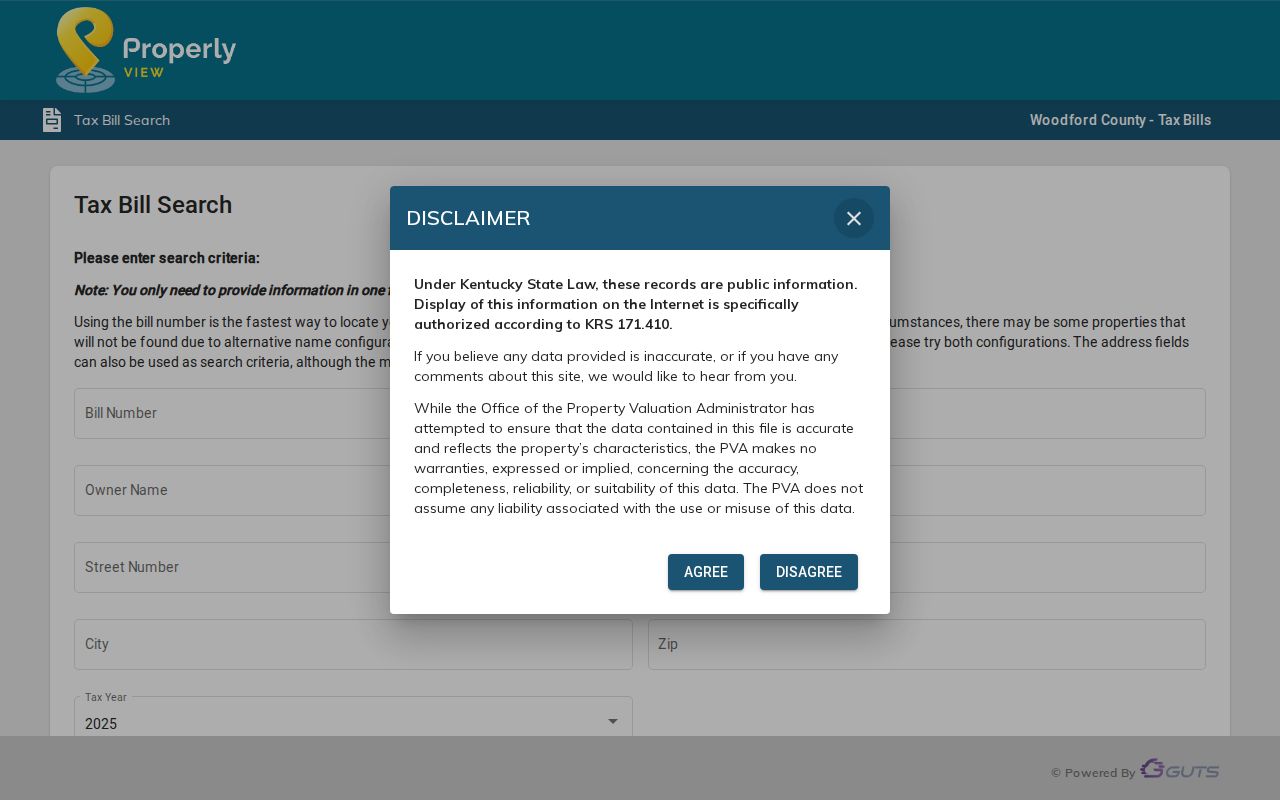
That portal is the access point for current Woodford County tax bills. Delinquent sales and certificate assignments stay in a separate County Clerk channel.
Look Up a Woodford County Tax Bill
Start any Woodford County tax bill lookup with a verified parcel from qPublic or the GIS map. A confirmed parcel number keeps you off similar addresses and owners. It also ties the bill to the correct tax parcel.
- Search PVDNet with the address or parcel reference.
- Open the correct year and record amount, status, and tax districts shown.
- Compare the PVA assessment year, value, classification, and exemptions.
- For delinquency, follow the Clerk's published calendar and certificate status.
- Assessed value
- The PVA valuation to which tax rules apply.
- Levy or rate
- A jurisdiction's rate used in computing the bill.
- Homestead exemption
- A statutory deduction for qualified applicants, not proof of title or occupancy by itself.
- Tax lien
- A recorded or statutory claim arising from unpaid tax, distinct from the current bill screen.
January 1 Controls the Tax-Year Owner
The PVA's local FAQ is blunt. Whoever owns the parcel on January 1 owes the full tax year. A later closing can split the cost between buyer and seller by contract. But that private deal never rewrites the county's rule. So compare three things before calling a name stale. Check the deed recording date. Check the assessment's owner of record. Check the bill year against each other.
The Woodford PVA publishes no set refresh interval for the tax roll. When a deed postdates the roll, describe that parcel's timing alone. Then verify the record directly with the PVA office.
Note: A recent buyer may hold a recorded deed while the assessment or bill still displays the January 1 owner.
Woodford's Four-Year Inspection Cycle
Every taxable real-property parcel in Woodford County gets an annual fair-cash assessment. Each parcel also gets a physical exam at least once every four years, per the PVA. Staff gather land and structure data and measure improvements. They keep sketches or photos in the file. Planning and zoning feeds in permit data for additions, garages, multifamily work, pools, condominiums, and manufactured-home placements. Treat an improvement entry as assessment evidence only. Pull the related permit, plan, inspection, or Planning Commission action separately when construction history matters.
Apply Kentucky Exemptions to the Right Year
The Kentucky Department of Revenue lists a $49,100 homestead exemption for 2025–2026. Woodford PVA guidance extends it to owners 65 or older. It also covers recipients of 100% disability benefits. The amount shifts with each assessment period. So confirm the current figure and application route before counting the savings. Farm land may qualify for agricultural-value treatment instead of ordinary fair-cash value. Read classification and exemptions separately. Never treat the resulting taxable assessment as a likely sale price in Woodford County property records.
Follow the 2026 Delinquent-Tax Calendar
The Clerk's 2026 delinquent-tax instructions cover 2025 bills. They set April turnover, July list and publication dates, and an August 24 sale. Buyers must put down a 25% deposit. They must pay in full under the stated rules, cover a $30 lien-assignment fee, and run a PACER bankruptcy check under KRS 134.128. Remember that a tax-sale row is not marketable title. Trace the certificate, recorded liens and releases, bankruptcy status, notices, redemption, and any later deed. Because dates and requirements shift, recheck the Clerk's calendar every cycle before relying on it.
Verify Woodford Tax Messages Before Paying
The Sheriff has flagged a fake "Tax Group Unit" letter. Deputy phone scams are also targeting Woodford County residents. Verify any demand through the official Sheriff's office at 859-873-3119 or the official portal. Never use a phone number or payment link that came only from an unsolicited notice. The comparison is simple. The PVA record explains the assessment. The Sheriff portal explains the current bill. The Clerk explains delinquency. An unverified letter is not a fourth official channel.
Appeal a Woodford County Assessment
Open with the PVA conference process during the inspection window. Local guidance sets a 13-day period starting the first Monday in May, Saturdays included. Bring a recent appraisal to the conference. Photographs help too. Add insurance information, current listings, comparable neighborhood sales, and any factual corrections you have for the property records.
Still unresolved? File with the locally appointed Board of Assessment Appeals. Do this no later than one workday after inspection closes. A further appeal goes to the Kentucky Board of Tax Appeals. Keep title or boundary disputes out of a market-value appeal. Those belong with recorded instruments, counsel, or a surveyor in Woodford County.
Protect the appeal window. Confer with the PVA during open inspection and file the local board appeal by the stated one-workday-after-inspection deadline. Confirm that year's dates directly with the office.
Prepare before the conference. Compare the property card against the deed, GIS acreage, building data, and permits. Then weigh genuinely comparable sales. Separate factual errors from any disagreement about market judgment. Dates matter. Photographs should be dated, appraisals and listings should state their effective date. Comparable sales should account for location, use, size, condition, and timing. Preserve the PVA's written response and every filing deadline. Keep them in case the matter reaches the local board or a state appeal. Updates move at different speeds. Recheck the correct assessment and tax years after any change. A successful correction may fix the valuation without resolving a current bill right away. A payment update never changes the underlying assessment. Keep those Woodford County records separate. That prevents a status message in one system from being treated as proof about another.
Separate Value Evidence from the Bill
Kentucky treats market value and fair cash value as one and the same for assessment administration. An assessment/sales-ratio study measures quality. It divides assessed value by the matching sale price across a sample of parcels. It is not a discount applied to each property. A deed's consideration serves as the transaction field. The taxable assessment, by contrast, may be reduced by exemptions or an agricultural classification. When you check Woodford County property tax records, keep the gross market value, taxable amount, exemption, assessment year, tax districts, rates, and bill total as separate fields. That discipline pays off. It keeps a current tax amount from being mistaken for a value opinion, and a recorded sale price from being read as the annual assessment.
Trace a Delinquent Certificate Through Completion
Begin with the basics. Gather the bill number and the listed owner. Add the parcel or legal description, the amount, the publication notice, and the scheduled sale. Then verify the 25% deposit and the full-payment rule. Check the $30 assignment fee and the PACER check against the current Clerk instructions. Search mortgages, judgments, tax liens, releases, and the court docket. Only then treat the certificate as an investment or ownership event. After the sale, preserve the assignment, redemption, release, and any resulting deed status. Roles differ. Never assume the assessment owner, the certificate purchaser, and the titled owner are the same person. Each role comes from a different stage and record in Woodford County's files.
Request Missing Woodford Tax Records
When the portal lacks a field, go to the office. The Woodford County Sheriff handles bill and payment information. The PVA holds assessment and exemption detail. The Clerk keeps delinquent certificate and sale records. Be specific about what you need. Include the parcel ID and address. Add the owner as displayed and the tax year. Give the bill number and the exact fields you want. Ask for electronic delivery where it exists. For a municipal-rate question, check the parcel against the ArcGIS City Limits layer. Then confirm the PVA tax district too. A Versailles or Midway mailing label proves nothing about city jurisdiction. For improvement changes, compare the PVA field record with permits. Use Planning Commission material as well. Never assume the assessment file is a complete construction record.
Match the Tax Year to Ownership Changes
A deed, an assessment, and a bill can all be accurate yet show different timing. Write down the deed execution and recording dates, the January 1 assessment owner, the assessment year, the bill year, and the payment date. Timing explains most surprises. If a closing agreement allocates taxes between the parties, treat it as a private transaction term, not a change to the PVA's January 1 responsibility rule. Corrections need follow-up. Confirm how the PVA communicates the revision. Verify the Sheriff bill reflects the same year. Never infer that one system updated just because another now displays the expected name or amount.